The ice remembered. We had forgotten.
Clair Patterson was not trying to expose one of the largest public health failures of the twentieth century.
He was trying to figure out how old the Earth was.
In the early 1950s, Patterson was developing a method to measure the age of rocks using uranium-lead dating. The science demanded extraordinary precision.
Instead, every sample kept coming back contaminated. The lead was everywhere.
It appeared in laboratory equipment, in the air, in ocean sediments, and even in the rocks themselves. The contamination was so widespread that many researchers accepted it as unavoidable.
Patterson refused to. If lead was everywhere, he wanted to know why.
The answer pointed toward a decision made nearly thirty years earlier.
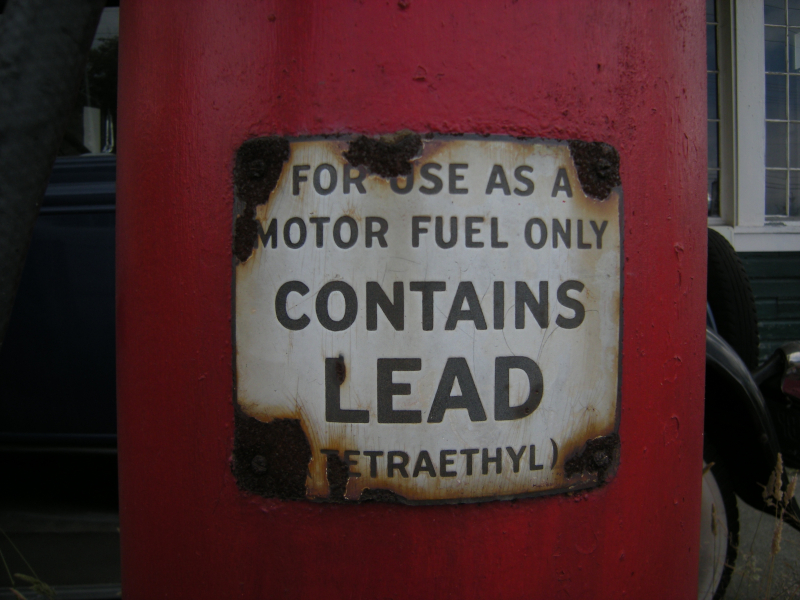
In 1923, gasoline manufacturers began adding tetraethyl lead to fuel to reduce engine knocking. Production expanded rapidly. So did the amount of lead released into the atmosphere.
The industry’s leading scientific voice was toxicologist Robert Kehoe. For years, he argued that no one knew what natural lead levels were in the first place. Without a reliable baseline, he maintained, there was no way to say modern exposure was unusually dangerous.
Patterson went looking for a world no one alive could remember.
He found it preserved in the ice of Greenland and Antarctica.
Layer by layer, the ice had preserved tiny samples of Earth’s atmosphere stretching back thousands of years. Unlike cities, factories, and laboratories, it had not forgotten what the air once contained.
The results were unmistakable. Lead concentrations had remained extremely low for centuries. Then, beginning in the twentieth century, they rose dramatically alongside the widespread use of leaded gasoline.
The contamination was industrial, not natural.
Patterson published his findings. Industry groups challenged his work. He lost consulting opportunities, faced organized opposition, and spent years defending conclusions that are now widely accepted. His research ultimately helped build the scientific case for removing lead from gasoline in the United States, a process completed in 1986.
Millions of children had already grown up breathing the exhaust.
Patterson’s work changed environmental science, but it also revealed something larger. A polluted world had become so familiar that many people assumed it had always been that way. Before anyone could measure the damage, someone first had to remember what “normal” looked like.
Sometimes oblivion does not erase the evidence.
It erases the baseline.