The Committee That Looked Away.
Her name was Rosalind Elsie Franklin. She was a chemist and X-ray crystallographer who joined King’s College London in 1951 with a clear assignment: determine the structure of DNA using X-ray diffraction.
She was exceptionally good at it.
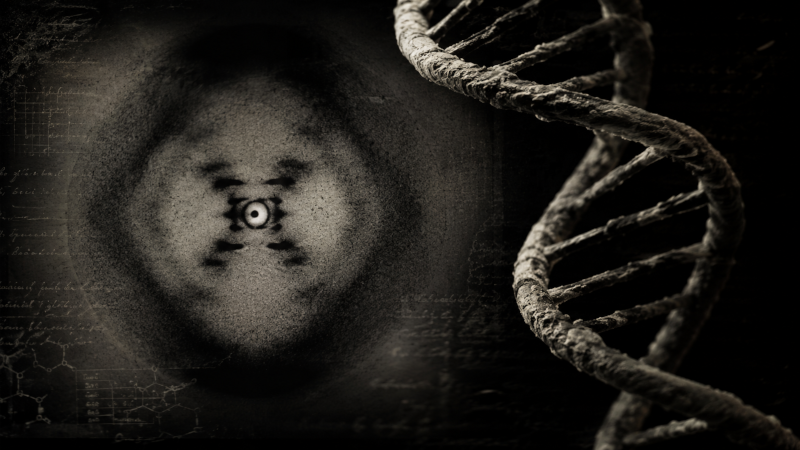
In 1952, working with her graduate student Raymond Gosling, Franklin produced what became one of the most important scientific images ever taken. Photograph 51 was a remarkably clear X-ray diffraction image of the B form of DNA. It revealed the unmistakable signature of a helix and showed that the molecule’s phosphate backbone lay on the outside.
Franklin was methodical and cautious. She refused to draw conclusions until she believed the evidence justified them.
It would be used against her.
At King’s College, Franklin’s relationship with colleague Maurice Wilkins deteriorated almost immediately. Wilkins had mistakenly assumed she was joining the laboratory as his assistant rather than as an independent researcher. The misunderstanding poisoned their working relationship from the beginning.
In January 1953, without Franklin’s knowledge, Wilkins showed Photograph 51 to James Watson. At roughly the same time, Watson and Francis Crick gained access to a Medical Research Council progress report containing detailed crystallographic measurements from Franklin’s ongoing DNA research.
Historians continue to debate how much Photograph 51 itself influenced Watson and Crick’s model. There is far less debate about the Medical Research Council report. Franklin’s measurements proved essential to confirming the double helix, and she had not consented to their use.
On April 25, 1953, Nature published three papers on DNA. Watson and Crick proposed the double helix model. Wilkins’ team provided supporting evidence. Franklin and Gosling published the X-ray data that made the model possible.
Evidence published in 2023 suggests Franklin was not merely providing supporting observations. She was an equal contributor to discovering DNA’s structure, a role that was diminished in the story that followed.
Before the papers appeared, Franklin had already left King’s College. She moved to Birkbeck College, where she made further breakthroughs studying viruses, including the tobacco mosaic virus. She later developed ovarian cancer, likely related to years of radiation exposure during her research.
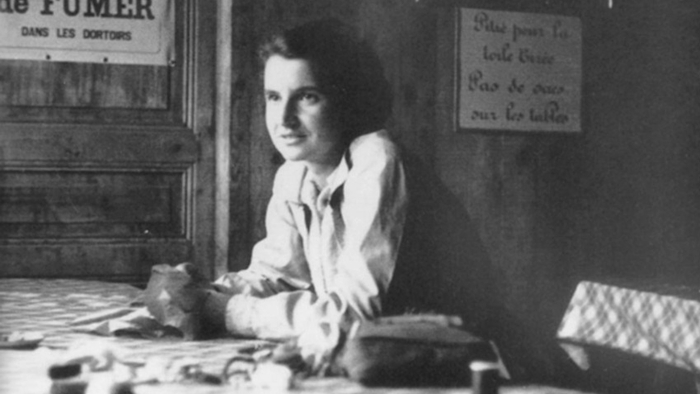
She died on April 16, 1958. She was 37 years old. Four years later, Watson, Crick, and Wilkins received the Nobel Prize in Physiology or Medicine. Franklin’s name was absent from their Nobel lectures.
In 1968, Watson published “The Double Helix”, portraying Franklin as difficult, abrasive, and incapable of recognizing what her own data revealed. Years later, in an epilogue, he acknowledged that many of his early judgments of her had been wrong. By then, his version of events had become the version most people knew.
Let’s be direct about what that means.
The scientist who benefited most from Franklin’s work spent years telling the world she had failed to understand it. He did so in a bestselling memoir. He did so while holding a Nobel Prize she never received.
Rosalind Franklin decoded the architecture of life. She was then erased from the story of it.
Today, the double helix is one of the most recognizable symbols in science. It appears on textbooks, research institutes, corporate logos, and monuments around the world.
Every strand of it was illuminated first by a woman whose name most people could not tell you. That outcome was not inevitable. It resulted from decisions made by individuals and accepted by institutions.
Oblivion rarely arrives all at once.
More often, it is built one omission at a time.