Some lies just drift, weightless, until oblivion decides it’s done waiting.
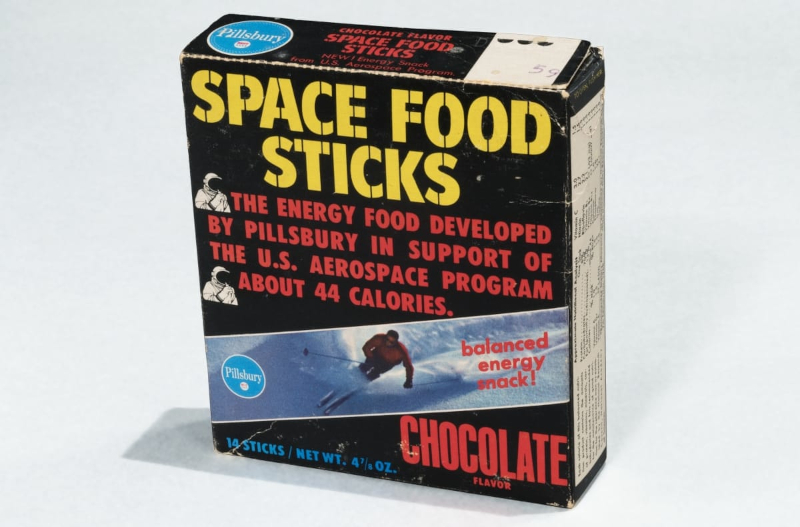
In 1971, Pillsbury put a candy bar in a wrapper covered in stars and called it astronaut food. Nobody on a spacecraft was eating Space Food Sticks. By the time these things hit shelves, the actual Apollo program was using freeze-dried pouches and bite-sized cubes, not chewy caramel logs in chocolate, peanut butter, and “malt” flavors. But NASA had real involvement in the early R&D. There was a genuine nutritional research thread here – and Pillsbury’s marketing team took that thread and wove it into a flag they planted on every box.
It worked. For about a decade.
Cyclamate was banned in 1970 over cancer concerns, and the sweetener that gave Space Food Sticks their original taste was gone. Reformulate or die – they reformulated. The new version didn’t taste the same, and the people who’d grown up on the original noticed immediately. That was strike one.
Strike two was: nobody could figure out what these things were for. Too dense and weird to be candy, too candy-like to be a real meal substitute, and arriving just before granola bars and energy bars showed up in the late ’70s and carved out the exact niche Space Food Sticks had been awkwardly squatting in. The product had no category to retreat to. It just sort of…evaporated from US shelves, with barely a notice, while continuing to exist in Japan for years under a separate licensing deal – a quiet afterlife nobody back home knew about.
Here’s the part that gets buried: the space-age branding wasn’t just a gimmick that aged poorly. It was a snack built on borrowed legitimacy from a program that never actually used it, riding a wave of public fascination with a moonshot that, within a few years, the same public had largely stopped caring about. When the cultural moment that justified the lie disappeared, there was nothing underneath it. No flavor profile people were loyal to for its own sake. No nutritional niche. Just a star-spangled wrapper around a candy bar that ran out of orbit.
Nostalgia sellers still push “retro” knockoffs online today, banking on the same borrowed shine that sold the originals – proof that some lies don’t end. They just drift, weightless, until oblivion decides it’s done waiting.