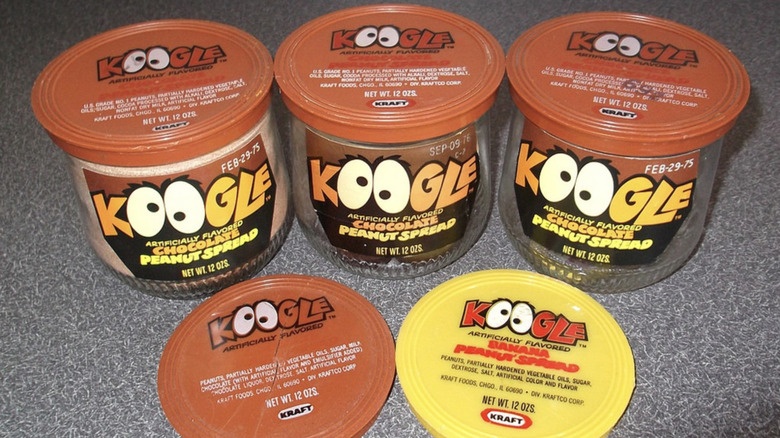
Sometimes being early just means you get left out of the origin story.
In 1971, Kraft looked at peanut butter – a food that had survived for decades on the strength of doing one thing honestly – and asked: what if it pretended to be dessert?
Koogle was a flavored peanut butter introduced in 1971, sold in flavors such as chocolate, banana, cinnamon and vanilla. The branding leaned hard into the bit – a cartoon mascot, a jar that looked more like a toy than a pantry item, a product built entirely around the idea that kids would eat more peanut butter if it tasted like candy first and protein second.
It didn’t last. Despite its novelty, the product was discontinued by the end of the decade.
What’s interesting to note isn’t so much that it failed. It’s when. Koogle arrived right at the start of a decade that would spend the next ten years quietly relitigating what was allowed to be marketed to children as food. The chocolate-peanut-butter combination it pioneered didn’t disappear, of course. It just got rebuilt by other companies, in other forms, decades later, as if Koogle had never tried first.
Being early isn’t the same as being remembered. Sometimes it just means you’re the version that gets left out of the origin story.